USDA 2026 Food Pyramid vs MyPlate: What Changed & How to Eat Well Anyway

The USDA’s return to the food pyramid in 2026 has sparked debate and confusion. This post explains why the original pyramid was replaced by MyPlate, what’s missing in the new guidance, and how to build a nutritious plate with clarity and confidence.
The Return of the Food Pyramid 2026: What Changed & What’s Missing
Let’s talk about the USDA 2026 Food Pyramid. To fully understand what this new guidance is communicating. Why it has sparked debate. We also need to revisit what came before it. It’s nearly impossible to discuss the 2026 pyramid or MyPlate without acknowledging the 1992 classic food pyramid, often referred to as the grain-based pyramid. This article is intentionally layered. Its goal is to bring you up to speed on the evolution of U.S. nutrition policy, explain what has changed, and help you make sense of the new food pyramid with clarity and context.
On January 7th, 2026, the United States Department of Agriculture (USDA) reintroduced a food pyramid model — a move that surprised many, especially after more than a decade of promoting MyPlate as the primary visual for healthy eating.
For some, the return of the pyramid feels nostalgic. For others, particularly those trained in public health, it raises important questions. Not because hierarchy is inherently wrong, but because hierarchy without explanation can confuse more than it clarifies. Let’s unpack.
Why the Original Food Pyramid Was Abolished
The original USDA food pyramid, introduced in the early 1990s, was eventually phased out for several key reasons:
- It over-emphasized grains as the dominant caloric base
- It failed to clearly distinguish whole vs. refined grains
- It treated fats as largely undesirable, despite emerging evidence
- Most importantly, it was difficult for the public to interpret and apply
Over time, research showed that Americans were:
- Over-consuming refined carbohydrates
- Underconsuming fiber, vegetables, and nutrient-dense foods
- Confused by serving sizes and food group placement
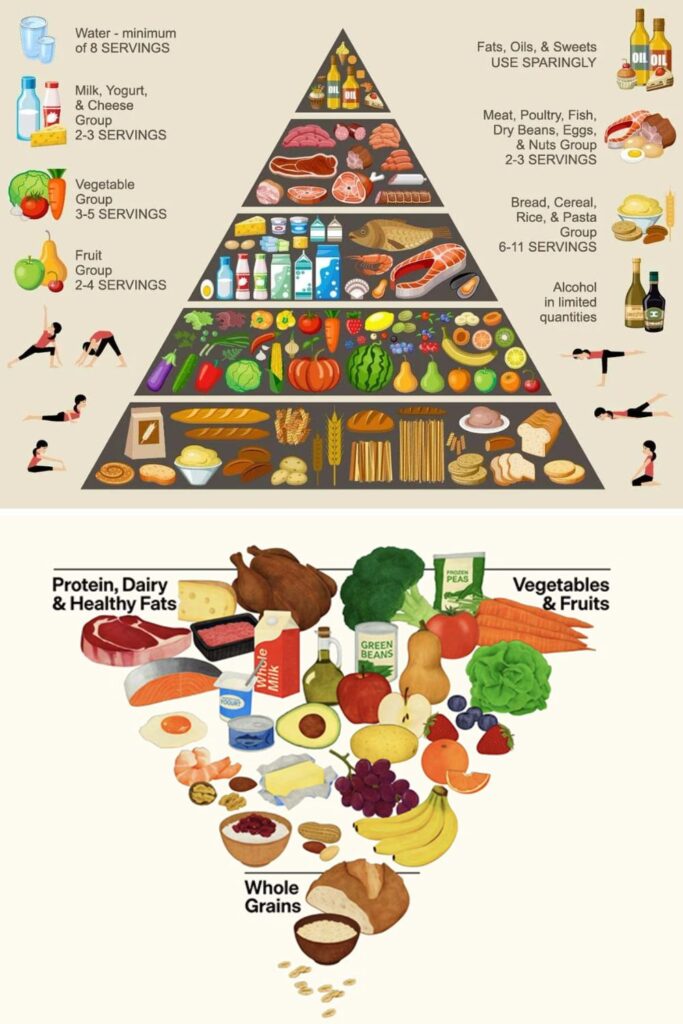
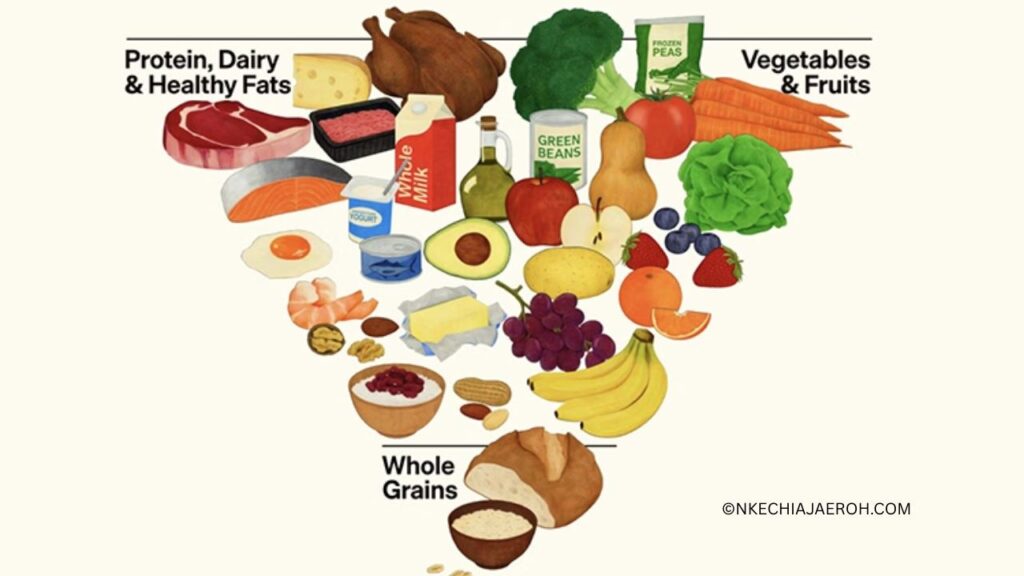
The pyramid’s layered hierarchy was conceptually sound but poorly translated into behavior. In the diagram below, see the old pyramid (top) vs the new pyramid (bottom).
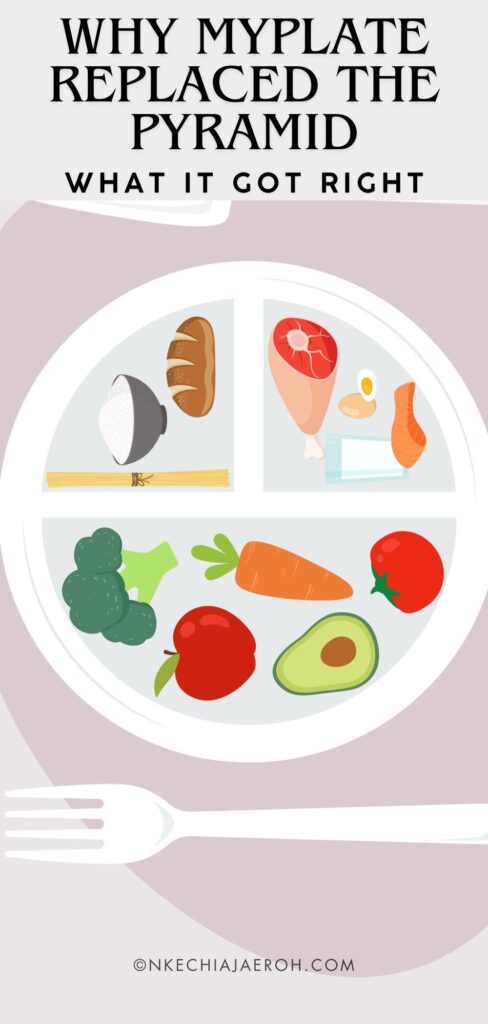
Why MyPlate Replaced the 1992 Pyramid — and What It Got Right
In 2011, the USDA introduced MyPlate to solve a communication problem.
Instead of hierarchy, MyPlate focused on:
- Meal-level balance
- Visual simplicity
- Portion awareness
- Practical application at the dinner table
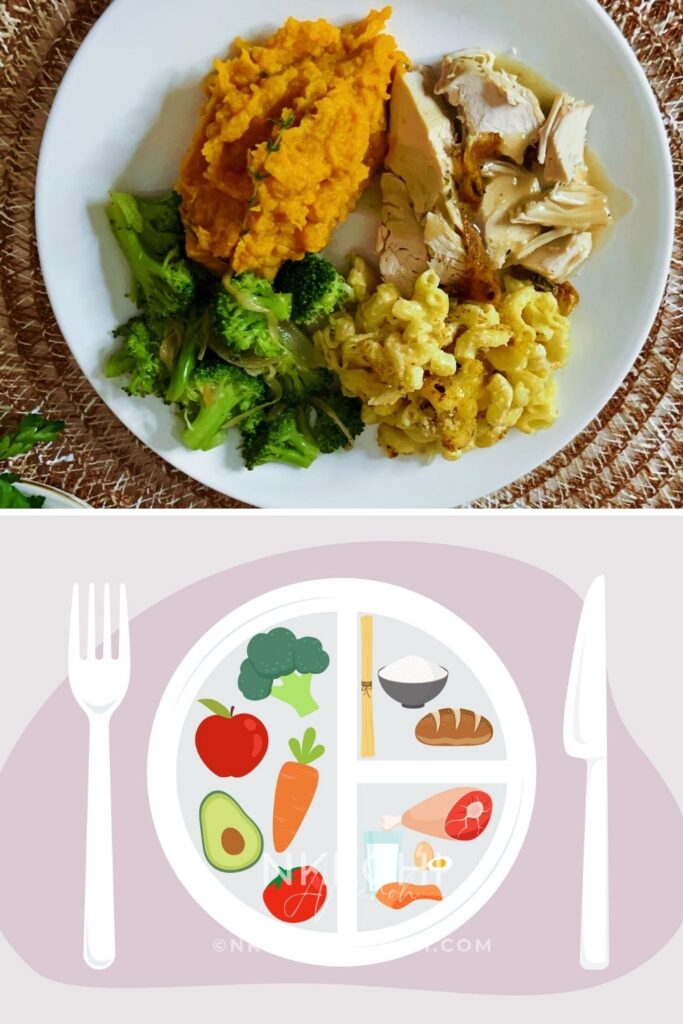
- Easy to follow; designed to simplify nutrition guidance and show how to build a balanced meal.
What MyPlate did well:
- It showed people how to build a meal, not a diet
- It removed fear-based food messaging
- It worked across cultures and cuisines
- It supported flexibility rather than rigidity
For educators, clinicians, and families, MyPlate became a teaching tool, super easy to explain. For instance, I can show MyPlate to my kids and they know how to make a plate for themselves. Below is my dinner plate vs MyPlate illustration.
However, MyPlate also had limitations:
- It didn’t communicate frequency over time
- It lacked guidance on ultra-processed foods
- It didn’t address dietary patterns beyond a single meal
- Still, its strength was clarity — something visuals should never sacrifice.
The USDA 2026 Food Pyramid: What’s New and Why There’s Skepticism
The reintroduction of the pyramid signals a return to hierarchical messaging, but with a modern twist. In the 2026 version:
- Whole grains appear visually minimized at the base
- Protein, dairy, and fats appear higher and more prominent
- The traditional “eat most at the bottom” logic is no longer clearly explained
The USDA 2026 Food Pyramid creates real concerns:
From a public-health perspective, the visual may be interpreted as:
- A deprioritization of whole grains
- A normalization of higher animal protein and fat intake
- A shift away from fiber-centered dietary patterns
- A lack of distinction between nutritional quality vs. quantity
Though dietary guidance evolves as it should, the issue is that the new USDA 2026 pyramid reasserts hierarchy without clearly explaining what that hierarchy means in practice. Without explanation, visuals become confusing policy statements. To be honest, I was thrown off when I first looked at it. And as I write this article, most Americans and I wait for more guidance and explanation.
Why More Clarity Matters for the Public
Most people do not read dietary guidelines. They respond to images, headlines, and shortcuts. When guidance lacks clarity:
- Confusion increases
- Polarization grows (“carbs are bad” vs. “protein is king”)
- Equity gaps widen
- People disengage altogether
Nutrition visuals are tools, not rules. When guidance lacks explanation, education becomes essential. That’s where evidence-based interpretation, not assumptions, protects public health.
This is where health education must step in — and where I step in.
How to Build a Nutritious Plate (Even When the Visuals Fall Short)
Regardless of which graphic is trending, the fundamentals of nutrition have not changed. Here’s how to build a nutritious plate every time — without overthinking the pyramid.
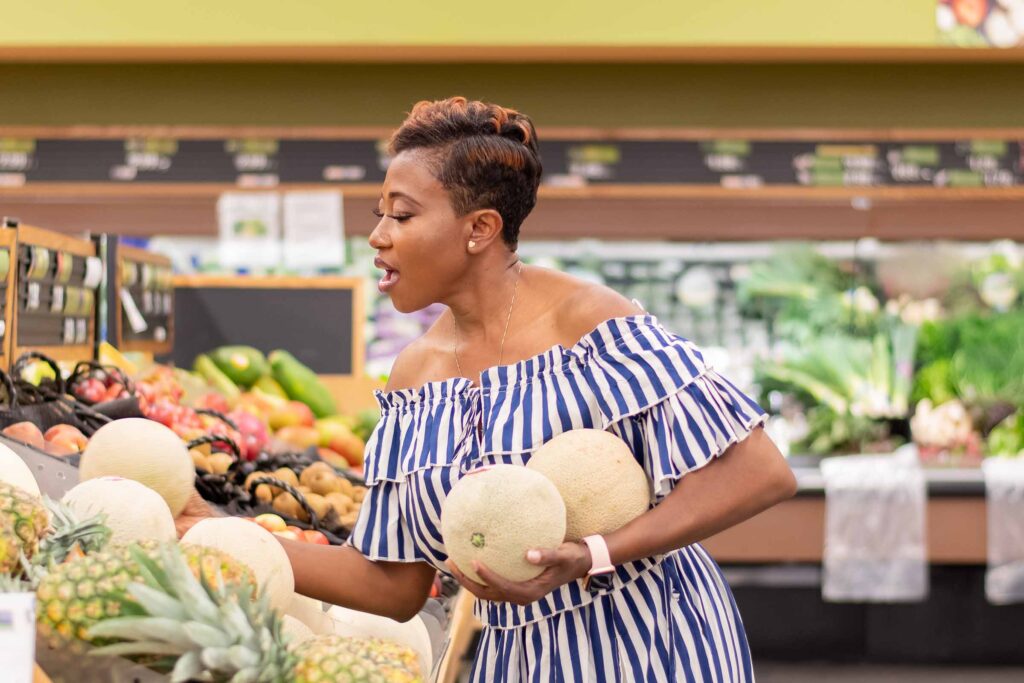
Remember: Every balanced plate begins with the choices you make at the grocery store.
Start With Plants (Always)
- Fill at least half your plate with vegetables and/or fruit
- Prioritize variety, color, and fiber. I always encourage everyone to start with the veggies they love. We love broccoli, sweet potatoes, cabbage and typically eat them a lot!
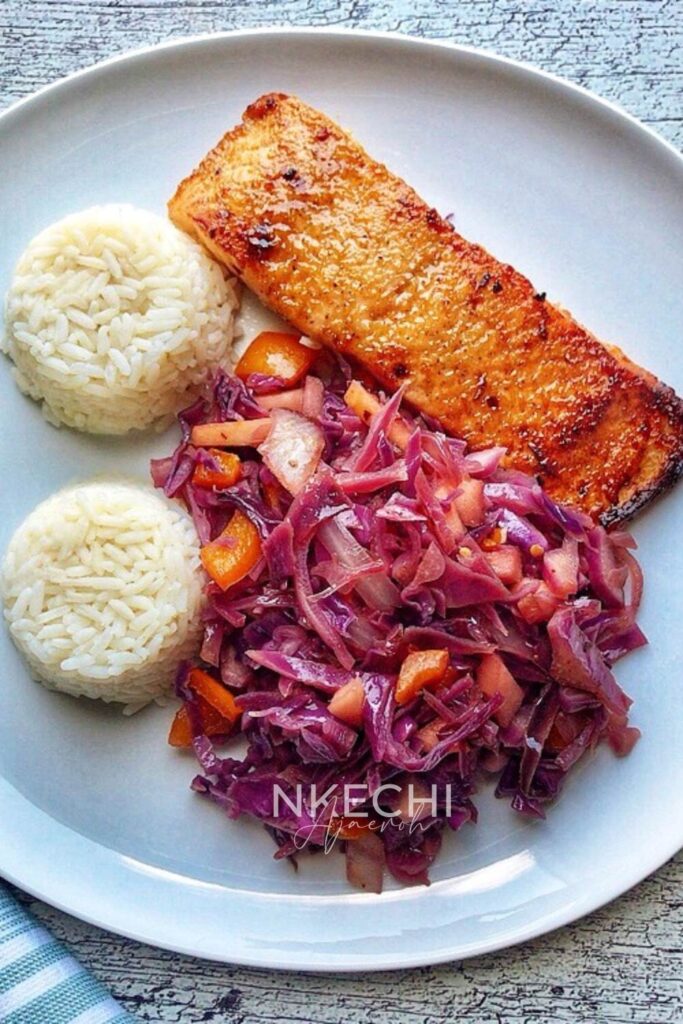
- This includes non-starchy and starchy vegetables, Check out my roasted mixed root vegetables, perfect colorful side! BTW, the plate below was so good! YUM! Make sure you are following me everywhere to learn how to build a balanced plate every time! 🙂
Add Protein Intentionally
- Choose lean (or minimally processed sources). Check out these protein recipes chicken, salmon, shrimp, beef, etc The salmon recipe on the plate above is oven-baked honey mustard salmon.
- Include plant proteins regularly. I love me some black bean burgers, butter beans akara and moi-moi, etc. Also, beans, chickpea, lentils (red), quinoa are all excellent choices.
- Portion matters more than dominance
Include Carbohydrates — Thoughtfully
- Whole grains, legumes, and starchy vegetables all count. We enjoy rice, brown rice, quinoa, etc. Check out my Harvest Quinoa Recipe (nutrient packed and filling)! Equally I have several rice recipes here on the blog!
- Quality and preparation matter more than elimination
- Carbs are not the enemy — refined excess is. Process carbohydrate is a sometimes food, once in a while to be exact.
Use Fats to Support, Not Overwhelm
- Healthy fats enhance nutrient absorption. Some examples of healthy fats include extra virgin olive oil, avocados, and olives. Also, nuts (almonds, walnuts, pistachios, cashews), and seeds (chia seeds, flaxseed, pumpkin seeds, sunflower seeds). Nut butters, such as peanut butter and almond butter, that use minimal ingredients are great too.I love avocado, I add them to my rice or quinoa bowls!
- Small amounts go a long way
- Be mindful of hidden fats in ultra-processed foods; they add up quickly
Dairy Is Optional, Not Foundational
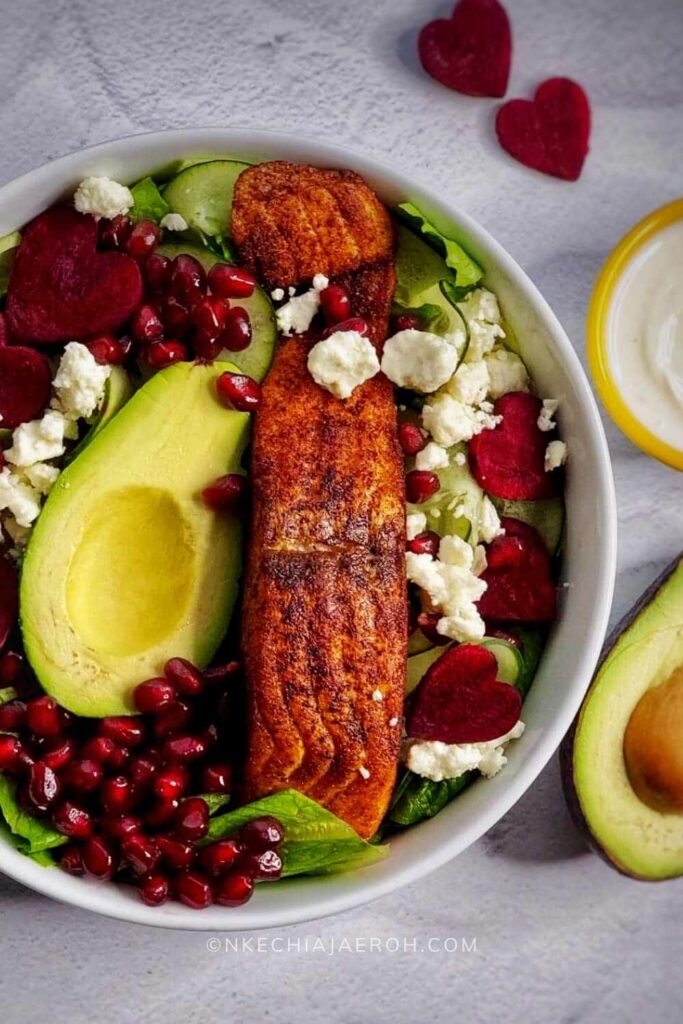
- Include if tolerated and desired. We use less milk in the family currently as the kids are no longer dependent on it, however, we still use cheeses in wraps, salads (such as below), etc. Do what works for you and your household!
- Fortified alternatives count
- It doesn’t need to appear at every meal
Every Balanced Plate Starts at the Grocery Store
These simple, realistic tips can help you shop with intention and set yourself up for healthier meals all week long:
- Plan ahead and write a list. Knowing what you’re shopping for reduces impulse buys and decision fatigue. Download out my Healthy Grocery List for Blood Pressure (if needed).
- Stick to your list as much as possible. It keeps you focused on foods that support balanced meals rather than convenience grabs.
- Buy fruits and vegetables you actually enjoy. Healthy food only works if you cook it and eat it. Choose produce you know how to prepare and like to eat.
- Shop with meal prep in mind. Think about meals that can stretch across several days so you’re not cooking from scratch every night.
The USDA 2026 Food Pyramid Frequently Asked Questions
No. Whole grains remain an important source of fiber and nutrients. The concern with the new pyramid is not the science, but how visual hierarchy may be interpreted without clear explanation.
The visual emphasis suggests a shift in policy priorities, but it does not provide clear guidance on quantity or balance. This is why interpretation and education are essential.
MyPlate remains a practical, meal-based tool for building balanced plates and is still widely used in nutrition education and clinical settings.
Use MyPlate to build everyday meals and view the pyramid as a policy-level framework, not a standalone instruction manual.
Focus on foundational principles—variety, whole foods, balance, and consistency—rather than chasing every new graphic or guideline.
The USDA 2026 Food Pyramid: Final Perspective
The return of the food pyramid reflects a shift in nutrition policy priorities — but it also highlights the limits of visuals without explanation. Healthy eating isn’t about chasing diagrams. It’s about understanding food, context, and consistency. And that’s where education, and not just graphics, makes the difference.
I hope this breakdown helped bring some clarity to the conversation. If you have further questions, I’m always happy to help.
Take good care, and talk soon.
Check Out More Posts On How to Improve Your Nutrition
- 55 Heart-Healthy Vegetables to Improve Your Heart Health
- 15 Foods to Help You Quit Sugar Cravings Naturally
- Foods That Promote Healthy Breasts
- How To Eat Healthy During the Holidays
- 21 Foods to Eat To Improve High Blood Pressure
Finally, let’s connect on social media, am on Pinterest, Facebook, Instagram, Twitter, and YouTube. If you like video recipes, then be sure to head over to my YouTube Channel. Share this post, and SAVE/PIN THIS IMAGE ON PINTEREST! ⤵️
THANKS FOR STOPPING BY! Stay well, safe and keep living your life to the fullest!


You may Also Like