
Anti-Inflammatory Grocery List: What to Buy for a Healthier Week

Not sure what to buy for an anti-inflammatory diet? This simple anti-inflammatory grocery list makes shopping easier with nourishing fruits, vegetables, proteins, whole grains, healthy fats, herbs, and spices. Plus, discover practical tips to help you build healthier meals all week without overcomplicating your grocery cart.
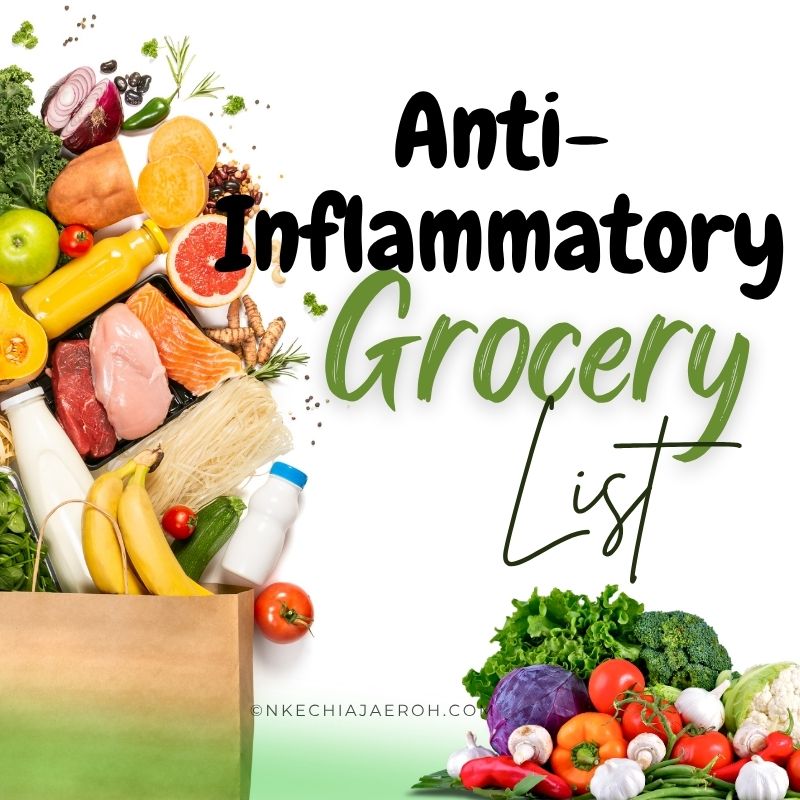
Foods to Buy for an Anti-Inflammatory Diet
If you’ve been following along, last time here on the blog we chatted about the best anti-inflammatory foods, their health benefits, and simple meal ideas. Today, we’re taking that conversation one step further and making it practical, because knowing what to eat is one thing, but actually having those foods in your kitchen is another! So, if you want to eat more anti-inflammatory foods but aren’t quite sure what to buy or how to get started, this post is for you. This simple anti-inflammatory grocery list will help you fill your cart with nourishing everyday foods without making healthy eating complicated. One thing I always say is that healthy eating starts long before we sit down at the table. It starts with what we bring home from the grocery store! So, grab your grocery list, and let’s go shopping.
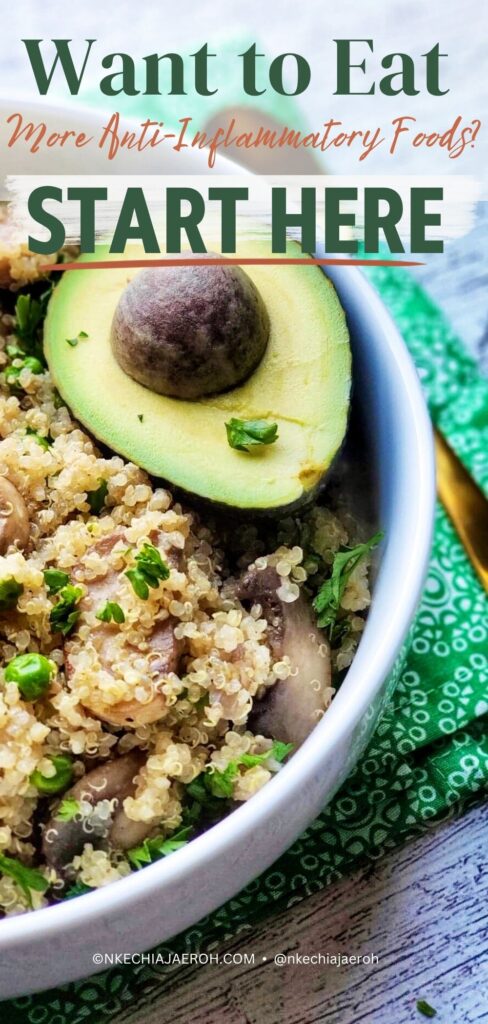
And if you’re a busy woman juggling work, family, and everything else life throws at you, having the right foods on hand can make nourishing yourself much easier. The good news? You don’t need a cart filled with expensive powders, supplements, or specialty foods. Many foods that fit into an anti-inflammatory eating pattern are probably foods you already know and enjoy: salmon, berries, leafy greens, beans, whole grains, olive oil, herbs, and spices. So, grab your grocery list and let’s go shopping! And for the quinoa mushroom recipe photo featured below… check it out on my YouTube Channel.
What Is an Anti-Inflammatory Grocery List?
An anti-inflammatory grocery list focuses primarily on whole and minimally processed foods that provide nutrients such as fiber, antioxidants, healthy fats, vitamins, minerals, and plant compounds. Research suggests that dietary patterns rich in fruits, vegetables, whole grains, legumes, nuts, seeds, fish, and healthy fats may help support a healthy inflammatory response and overall health. If you haven’t already, read my guide to the 20 Best Anti-Inflammatory Foods to Eat Every Week. I explain why these foods matter and share easy ways to enjoy them.
For today, we’re taking that information straight to the grocery store. So, ensure to save this post on your Pinterest to always have access to them!
Anti-Inflammatory Vegetable Produce
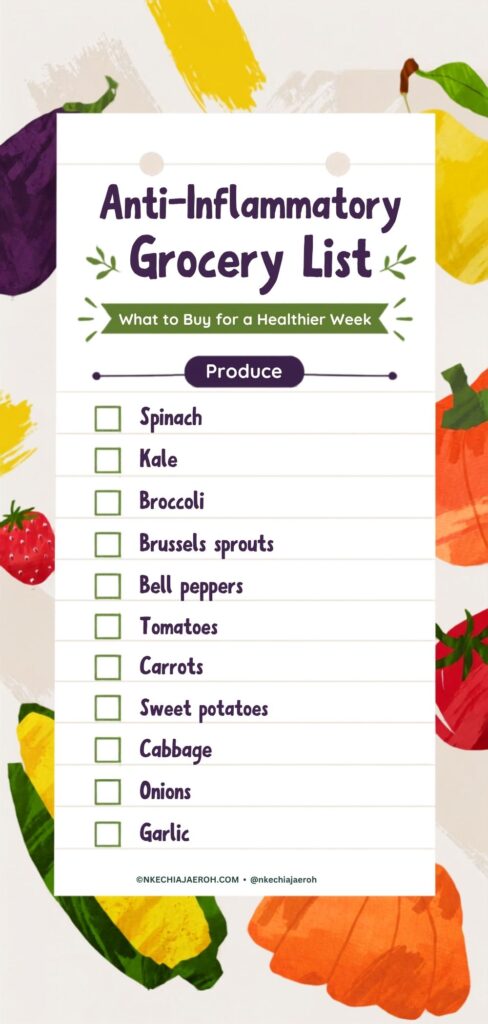
Let’s start in the produce section. Aim for a variety of colors instead of buying the same vegetables every week. Different colors provide different nutrients and beneficial plant compounds. Add some of these to your cart:
- Spinach
- Kale
- Broccoli
- Brussels sprouts
- Bell peppers
- Tomatoes
- Carrots
- Sweet potatoes
- Cabbage
- Onions
- Garlic
Frozen vegetables absolutely count, too! I keep frozen vegetables around because they make healthy eating much easier on busy or low-energy days. You can quickly add them to soups, stir-fries, rice bowls, pasta, or sheet-pan meals.
Kechi’s Tip: Don’t buy vegetables simply because they’re considered healthy. Buy vegetables you will actually eat. Healthy food sitting forgotten in the refrigerator isn’t helping anybody! 😂
Anti-Inflammatory Grocery List – Fruits
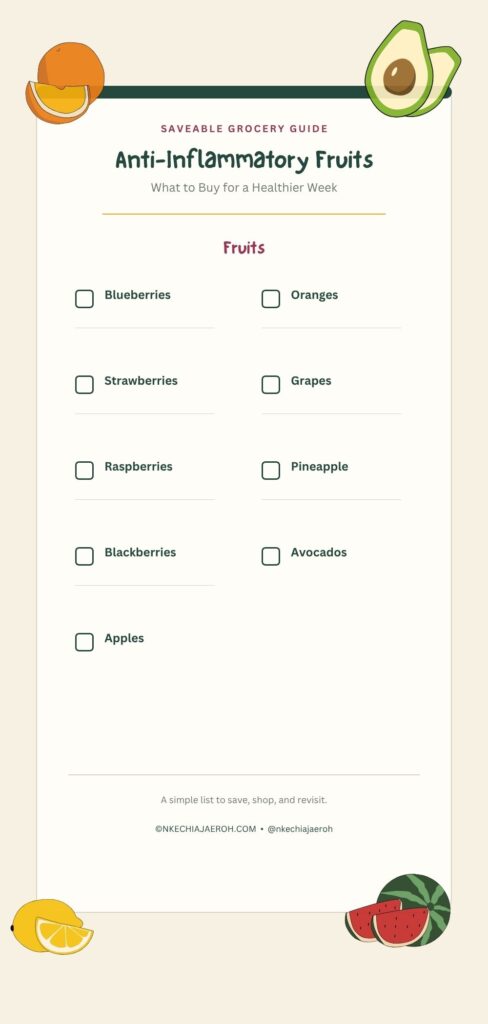
Fruit is one of the easiest ways to add antioxidants, fiber, vitamins, and natural sweetness to your meals. Some great options include:
- Blueberries
- Strawberries
- Raspberries
- Blackberries
- Apples
- Oranges
- Grapes
- Pineapple
- Avocados
I especially love berries because they’re incredibly versatile. Add them to oatmeal, Greek yogurt, chia pudding, smoothies, or salads. Frozen berries are another freezer staple in my house. They last longer and make breakfast smoothies ridiculously easy.
Protein for Anti-Inflammatory Grocery List
Protein becomes especially important as we get older because it helps support muscle maintenance, satiety, and overall health. Try adding:
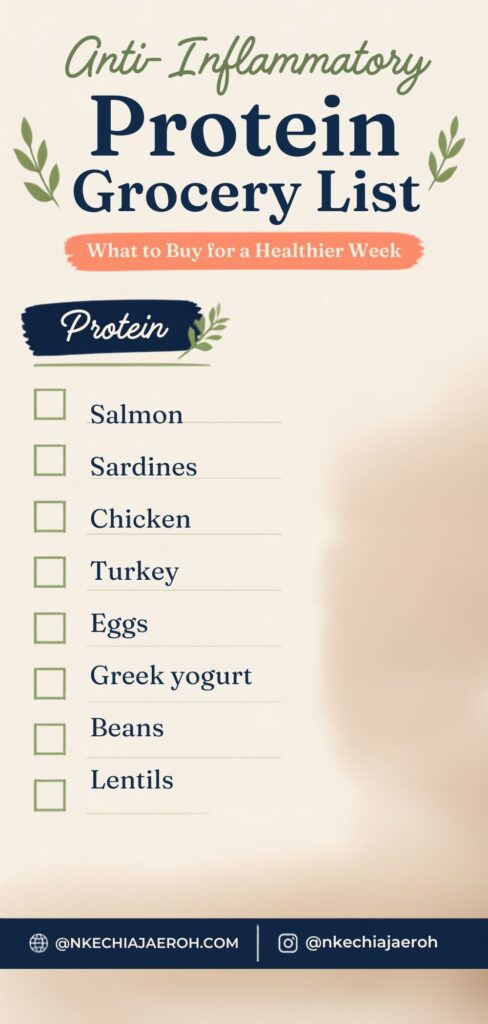
- Salmon
- Sardines
- Chicken
- Turkey
- Eggs
- Greek yogurt
- Beans (like butter beans)
- Lentils
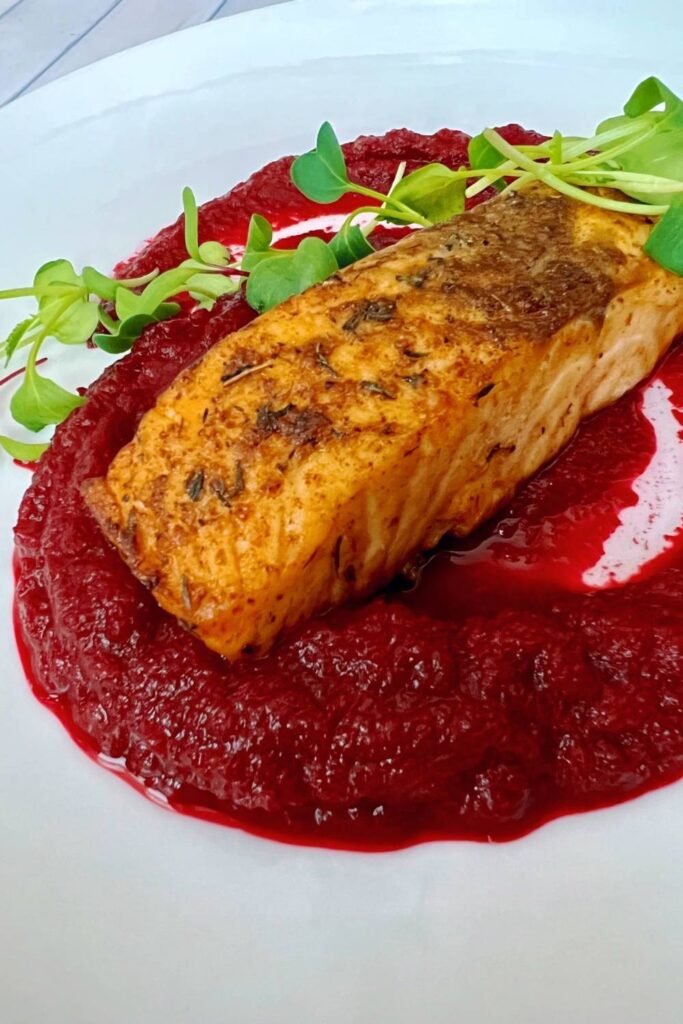
Salmon is one of my favorites because it provides protein along with omega-3 fatty acids. If you need an easy dinner idea, try my Air Fryer Salmon with pureed beetroot or roasted vegetables and quinoa. And don’t underestimate beans! Black beans, butter beans, and black-eyed peas are staples in my kitchen. I use them for Nigerian beans porridge, akara, moi-moi, salads, soups, and grain bowls.
Whole Grains and High-Fiber Carbohydrates
Yes, carbohydrates can absolutely belong in a nourishing diet! Instead of fearing carbs, focus more often on fiber-rich, minimally processed options. Add:
- Old-fashioned oats
- Quinoa
- Brown rice
- Barley
- Whole-grain bread
- Whole-grain pasta
- Sweet potatoes
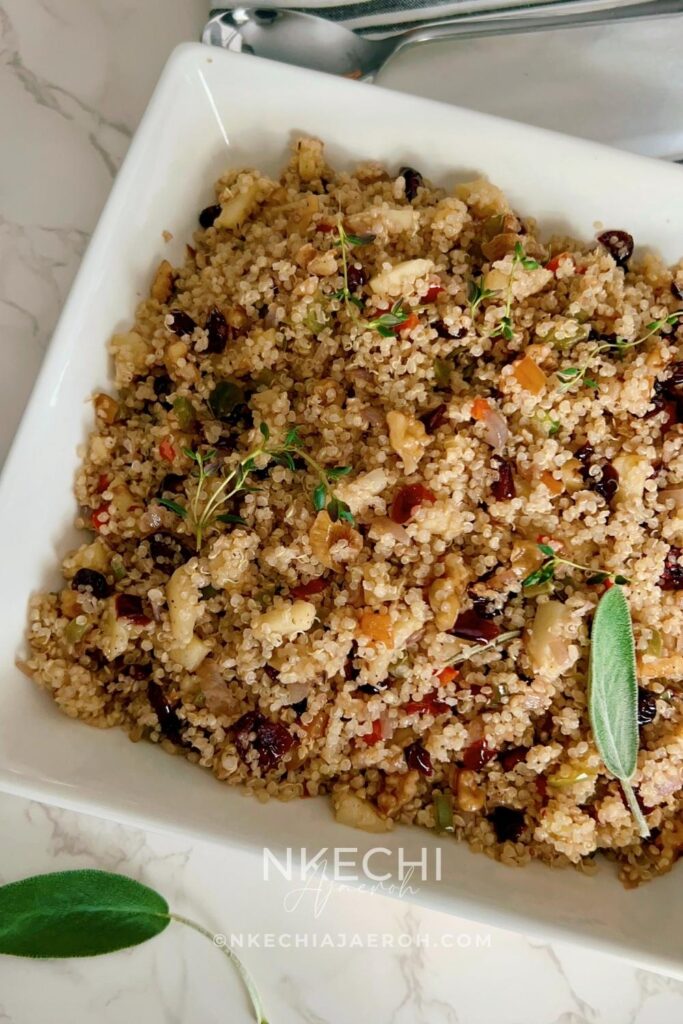
If you’ve been around here for a while, you already know quinoa has a permanent residence in my kitchen. 😂 I use it in quinoa fried rice, salads, bowls, and as a simple side dish for salmon or chicken. The quinoa recipe pictured below is Harvest Quinoa Pilaf – meat free and soooooo good! This makes a perfect wholesome heathy side!
Healthy Fats, Nuts, and Seeds
Healthy fats make food satisfying and can provide beneficial nutrients. Keep some of these on hand:
- Extra virgin olive oil
- Avocados
- Walnuts
- Almonds
- Chia seeds
- Flaxseeds
- Pumpkin seeds
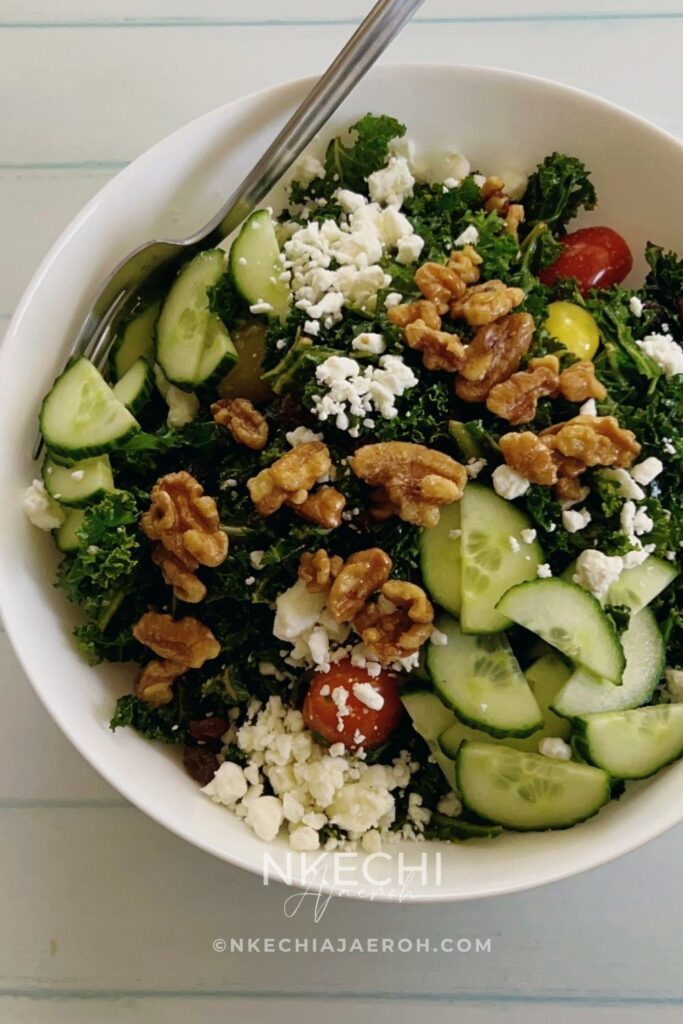
Extra virgin olive oil is especially useful because you can use it for salad dressings, marinades, roasting vegetables, and finishing meals. Walnuts and chia seeds are also easy additions to oatmeal, yogurt, smoothies, and salads (such as the walnut salad and my Kale salad – featured below).
Herbs, Spices, and Flavor Boosters
Healthy food should taste GOOD!
Stocking your kitchen with herbs and spices can help you create flavorful meals without depending heavily on salt, sugar, or highly processed sauces. Try:
- Ginger
- Turmeric
- Cinnamon
- Garlic
- Basil
- Parsley
- Cilantro
- Rosemary
- Thyme
- Black pepper
Fresh ginger and turmeric are wonderful additions to smoothies, teas, soups, marinades, and homemade juices.
The Nourished Woman™ Reminder: Nourishing food doesn’t have to be bland. Flavor is part of the experience. Use herbs, spices, citrus, garlic, onions, and other seasonings to make healthy food something you genuinely look forward to eating.
What Foods Should You Limit?
I don’t believe we need to divide food into “good” and “bad” categories. What matters most is your overall eating pattern. However, if you’re trying to support your health and reduce your intake of foods associated with inflammatory dietary patterns, consider eating these less frequently:
- Sugary drinks
- Highly processed snack foods
- Processed meats
- Excess sweets and desserts
- Refined grains
- Foods very high in sodium
- Foods containing large amounts of added sugar
Notice I said limit, not “never eat again.” A birthday cake is still allowed at a birthday party. 😊 The goal is to make nourishing foods your everyday foundation while leaving room for real life.
How Anti-Inflammatory Grocery list works!
You don’t need to completely change the way you eat after one grocery trip.
- The next time you shop, choose two or three nourishing foods you aren’t currently buying and add them to your cart.
- Maybe it’s blueberries for your oatmeal.
- Perhaps it’s salmon for dinner.
- Maybe you’re finally giving quinoa a chance! 😂
- Then build from there.
- Because becoming healthier isn’t about having the “perfect” grocery cart. It’s about making small choices you can consistently repeat.
- Nourish first. One grocery trip, one meal, and one choice at a time.
NOTE: If this entire list feels overwhelming, don’t buy everything! For one week, your cart could simply include:
- Produce: spinach, broccoli, tomatoes, sweet potatoes, blueberries, strawberries and avocados.
- Protein: salmon, chicken, eggs, Greek yogurt and black beans.
- Pantry: quinoa, oats, brown rice, extra virgin olive oil, walnuts and chia seeds.
- Flavor: garlic, ginger, turmeric and fresh herbs.
That’s enough food to create several breakfasts, salads, grain bowls, smoothies, and dinners throughout the week. Simple works.
Learn More About How Anti-Inflammatory Food Supports Your Health!
Want to understand why these foods may support your health? Read my 20 Best Anti-Inflammatory Foods to Eat Every Week for the health benefits, simple meal ideas, and recipes to help you put them into practice.
And if you’re especially focused on supporting healthy blood pressure, download my FREE Healthy Grocery List for Blood Pressure to make your next shopping trip even easier.
Want more wellness articles? Browse my Wellness category for evidence-informed nutrition tips, healthy recipes, and practical ways to support your health.
More Anti-Inflammation Articles:
Finally, let’s connect on social media, am on Pinterest, Facebook, Instagram, Twitter, and YouTube. If you like video recipes, then be sure to head over to my YouTube Channel. Share this post, and SAVE/PIN THIS IMAGE ON PINTEREST! ⤵️
THANKS FOR STOPPING BY! Stay well, safe and keep living your life to the fullest!

Disclaimer: This article is intended for educational and informational purposes only and should not be considered medical advice. While I hold a Master of Public Health (MPH) and enjoy sharing evidence-informed nutrition and wellness information, I am not a physician or registered dietitian. The content shared here is not intended to diagnose, treat, cure, or prevent any disease. Always consult your healthcare provider before making significant changes to your diet or lifestyle, especially if you have a medical condition, are pregnant or nursing, or take prescription medications. My goal is simply to encourage and inspire you to make practical, nourishing food choices that support your overall health—one meal at a time.

You may Also Like