
12 Journaling Exercises to Let Go of Fear and Anxiety

Journaling is an ancient practice that is as old as humanity. If you have been skeptical about it, then these journaling exercises help. Aside from enhancing mental clarity, improving memory, and promoting emotional well-being, these journaling exercises, aka prompts, will help you let go of anxiety and fear.
What is Journaling? And What Are Journaling Exercises?
Lately, I’ve been journaling here and there, but I really want to be consistent. In the hopes that I can inspire myself and you, too. This post is all about journaling exercises and how we can use them to let go of the fear and anxiety that seems all too prevalent around us in the world today. This helps us redirect ourselves to the things that truly matter.
Journaling is just what it sounds like – making a habit of writing down your thoughts and feelings for the purpose of self-reflection and growth. You can do specific activities for journaling exercises. Such as following prompts (see further below) or simply write about your experiences to gain deeper insight into your innermost self. Make it a routine to journal daily or weekly (at least that’s what I’m trying to do), to get the most out of it.
How to Start Journaling as a Beginner?
All you need to do to get started is to choose a notebook that you like. Writing by hand is the best way to connect with yourself, so find one that motivates you to pick it up daily. I prefer spiral bound notebooks. Get a good pen and let the words flow without worrying about making it perfect. Annnnnd I love me some colorful pens, different colors for different emotions. The key is just to express yourself with honesty.
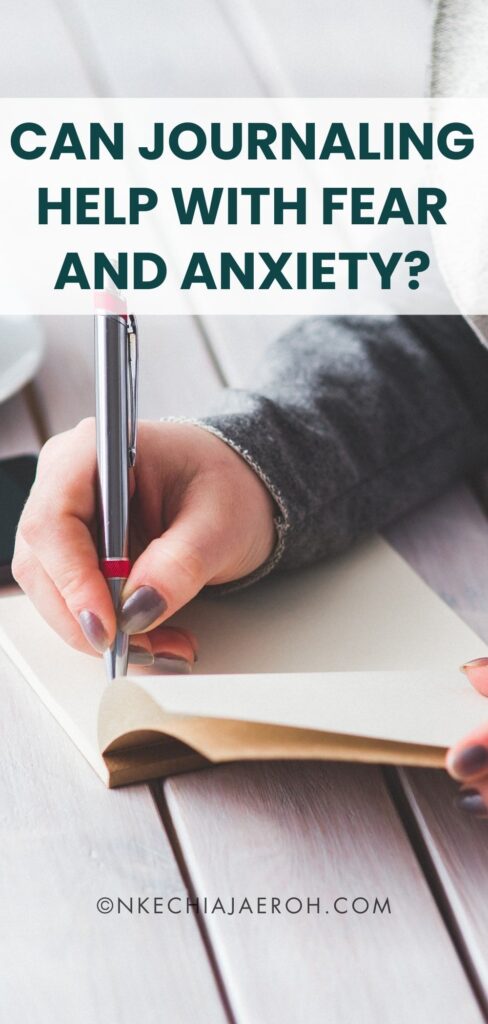
Can Journaling Help with Fear and Anxiety?
Absolutely! It can help you pinpoint, understand, and process the emotions you feel. This allows you to regain your calmness and clarity. It serves as a release, allowing you to let it go and move forward.
12 Journaling Exercises and Prompts to Let Go of Fear and Anxiety
Grab your journal and pen, and let’s get started! If you’re not sure where to begin, start here:
Journaling Exercises to Lift Up Your Soul
1. Encourage Yourself
When feeling stuck, focus on something positive, such as a list of positive affirmations. Try to answer, “What is one kind or supportive statement that you can tell yourself?”
2. Daydream
Let your imagination roam and explore the possibilities by answering, “What would I do if I knew that there was no way I could fail?”
3. Nurture
On tough days when the anxiety is spiraling out of control, you may need a little more love. Ask yourself, “What do I really need right now in this moment?
4. Focus on Feelings
Since anxiety can feel like a rollercoaster, it can help to release all the feelings associated with it. Prompt your journaling by answering, “How do I really feel today?” This helps you take care and prioritize mental health as well. BTW, my word of the year for 2025 is “take care.” Please do take care.❤️
Journaling Prompts to Shift your Views
5. Excavate from the Corners of Your Mind
Those deep, dark thoughts that lurk in the shadows of your mind, setting off your anxiety, need to be released. Journal around, “What is making me feel so anxious today?” and let it all out.
6. Practice Gratitude
Another great way to give anxiety a shove out the door is to switch your thinking to positivity. Positive energy attracts more of the same, and if you ask, “What am I grateful for today?” then you will be able to retrain your focus.
7. Free Flow Brain Dump
Free writing or stream of consciousness allows you to just plop it all out anything and everything that enters your mind. Let it all out, even if it’s something like, “I feel stupid, did I take out the trash, is the yogurt expired in the fridge, what am I doing here.”
8. Talk to Your Younger Self
Sometimes, the child in us needs more comfort and love. Write a journal entry as a letter to your younger self to remind that inner child everything will be okay. If you could go back in time, what would you tell yourself?
Journaling Exercises To Manage Reality
9. Shout Out Your Wins
If you prefer journaling at the end of your day, focusing on the things that went right are a great way to go. Even if the only thing that you accomplished was making your bed, it’s still a win.
10. Hold onto a Memory
Some memories can fill us with instant joy, and in those anxious moments, recalling them can make you happy again. Write about one of your favorite memories, allowing yourself to relive it in your journal.
11. Confront Fears
Dealing with anxiety can be rough, and while we often want to crawl under the covers and hide from it, sometimes confrontation is the answer. What are you afraid of and how is it hindering you? Write your fears down and you will be better poised to eliminate the power they have over your mind.
12. Gather Insights
Every day, we learn something new and we grow. Turn your focus on what you learned, which can help you shift the way you look at your anxious thoughts. Sometimes, what we learn is hard, but in the end, it ultimately benefits us and helps us move forward in the right direction.
Health Benefits of Journaling
When we journal, it promotes mental well-being by reducing our stresses and anxiety. I personally feel better after I let it all out, and I feel more aware of myself and my needs. There’s a reason why experts encourage journaling as a method for dealing with these feelings!
Journaling Tips
- Start small with just a few minutes a day
- Be consistent and set reminders to make sure you journal
- Do what feels right and works best for you
- Consider using the prompts and exercises listed above to help
- Let it be enjoyable rather than a chore (BTW, don’t forget to check out my YT channel for some food and laughter 🙂
Frequently Asked Questions About Journaling Exercises
There is no “best” time in any day to write in your journal, so pick a time where you feel ready for it. Some people like doing it in the morning with their coffee, while others like to do it before bed. You do you!
That’s another personal choice for you to make – you may find you feel better journaling every day, or you may find another rhythm works for you.
Yes! Kids build their writing skills, learn how to express their feelings, and build stamina, all of which can help them in school and social settings that extend into adulthood.
Again, no “best” here but rather, whatever works for you to help you self-reflect and promote your well-being is what you should do.
Some good habits around journaling involve setting aside time that works for you and being flexible with your approach. Ultimately, this is a private experience that should help you feel free from feelings that bog you down, so do what helps you make the most of it.
There is reflective journaling to help process your emotions; gratitude journaling to focus on positivity; and bullet journaling, which is best if you need help planning and organizing.
To start, you might want to go for a couple of minutes, say 2 to 5. You can then build up to a longer timeframe. Finding the duration that makes you feel most comfortable and allows for your consistency is the right amount.
When is it too late to start journaling?
Never! In fact, now is a great time to get started. I’m going to focus on consistently journaling, and I hope you will too!
What is the best journaling book or the best book to journal in?
Choose a devoted journal or even a notebook that has a special design or your favorite color. Make it appealing and you will be more motivated to use it. Currently, I have a spiral-bound notebook as well as my Kate Spade yearly planner. Both allow me to gather my thoughts and write them out.
More Wellness Posts To Check Out:
- 10 Morning Routines To Start A Stress-Free Day
- 10 Simple Ways To Reduce Anxiety Naturally
- 5 Reasons You Will Never Lose Weight With Calories In, Calories Out (CICO)
- 12 Ways To Manage Hypertension Naturally (Without Medication)
- 15 Foods That Will Help You Quit Sugar Cravings Naturally
- 12 Micro Habits To Lose Weight (Tiny Weight Loss Habits)
- 10 Ways To Prioritize Your Mental Health Everyday
- How To Eat Healthier During The Holidays
- 10 Things To Know About Aphasia And Frontotemporal Dementia
Finally, let’s connect on social media, am on Pinterest, Facebook, Instagram, Twitter, and YouTube. If you like video recipes, then be sure to head over to my YouTube Channel. Share this post, and SAVE/PIN THIS IMAGE ON PINTEREST! ⤵️
THANKS FOR STOPPING BY! Stay well, safe and keep living your life to the fullest!



You may Also Like